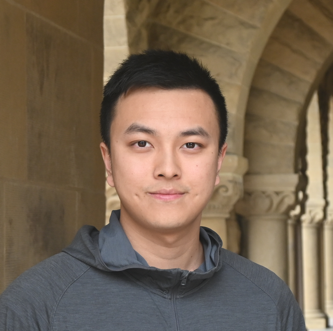
Zhanke Zhou is a Ph.D. student in the Trustworthy Machine Learning and Reasoning (TMLR) Group at Hong Kong Baptist University, advised by Prof. Bo Han. He was a visiting student at the Stanford Trustworthy Artificial Intelligence (STAIR) Lab at Stanford University, working with Prof. Sanmi Koyejo. His research focuses on trustworthy machine reasoning with foundation models, including large language models (LLMs) and vision-language models (VLMs), to solve complex problems such as mathematics and coding, as well as to accelerate scientific discovery and applications in fields such as biology, chemistry, and healthcare. He believes that reasoning is an essential pathway toward achieving artificial general intelligence (AGI). Trustworthy machine reasoning encompasses key properties including reasoning capability, robustness, safety, and explainability.

Chentao Cao is currently a Ph.D. student in the Trustworthy Machine Learning and Reasoning (TMLR) Group at Hong Kong Baptist University, under the supervision of Prof. Bo Han, and collaborating closely with Prof. Zhun Zhong. His research primarily centers on developing trustworthy machine reasoning frameworks with foundation models, including large language models (LLMs) and vision-language models (VLMs). His goal is to create robust and reliable reasoning models capable of addressing complex problems, such as mathematics. By enhancing the trustworthiness of foundation models, he seeks to drive advancements in critical downstream applications, particularly in healthcare and safety domains, thereby enabling more effective and safer solutions in real-world scenarios.
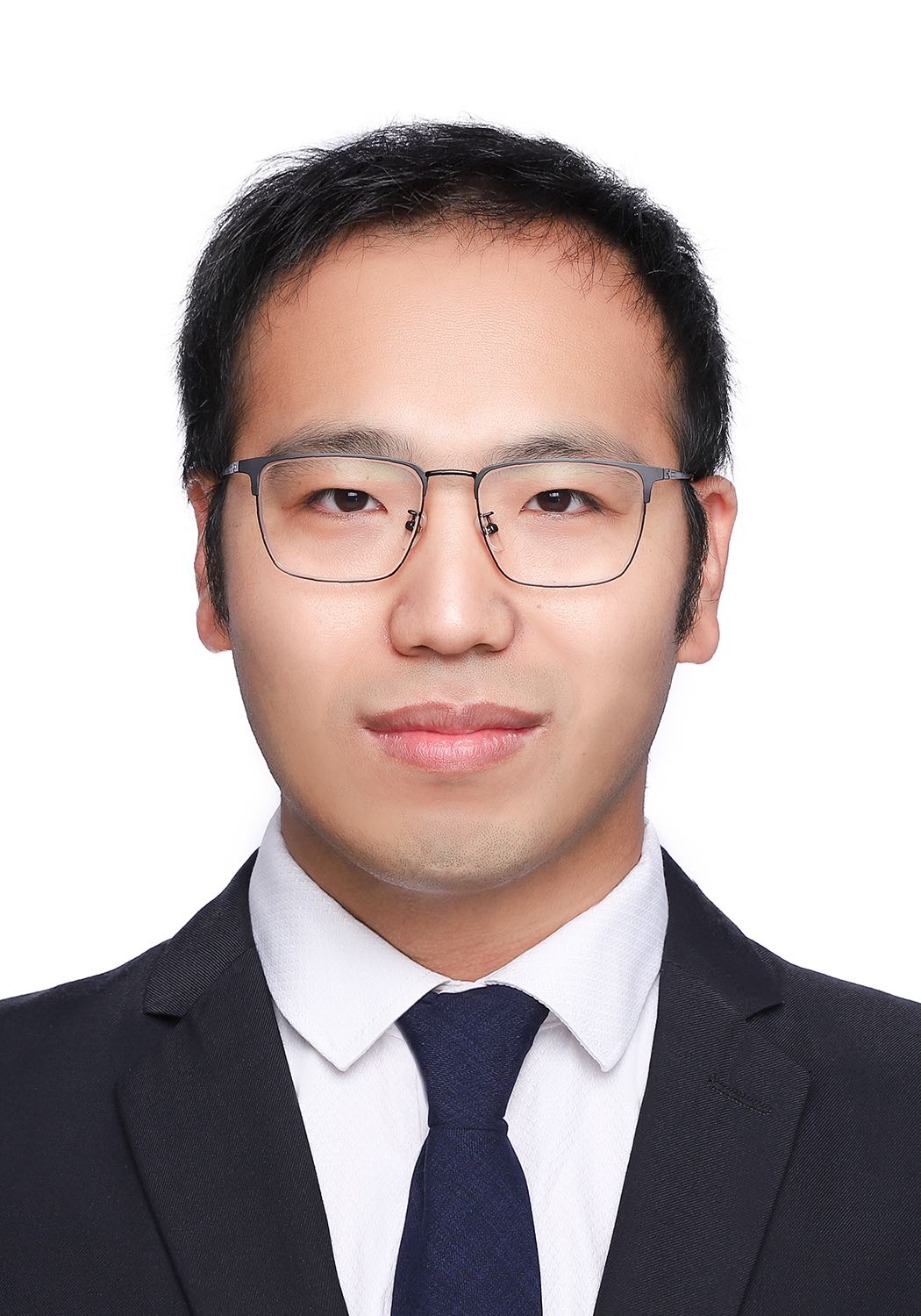
Jiangchao Yao is currently an Associate Professor at Cooperative Medianet Innovation Center, Shanghai Jiao Tong University and a research scientist in Shanghai AI Laboratory. Before taking the faculty job, he was an algorithm expert in Data Analytics and Intelligence Lab, DAMO Academy, Alibaba Group, and received the dual Ph.D. degree in Shanghai Jiao Tong University and University of Technology Sydney in 2019. His research mainly focuses on trustworthy machine learning and reasoning with the applications towards AI4Science. He has more than 100 publications in top-tier conferences and journals (e.g., ICML, NeurIPS, ICLR and TPAMI), and one monograph about trustworthy machine learning. He is area chair of ICML, NeurIPS and ICLR, and action editor of Transactions on Machine Learning Research and the journal Neural Networks. He has been selected as an MSRA StarTrack Scholar in 2025.
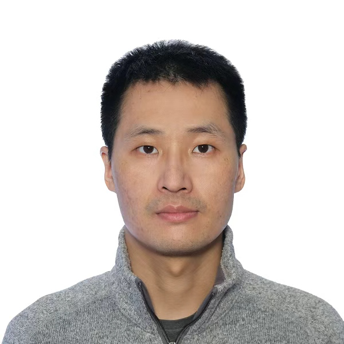
Bo Han is currently an Associate Professor in Machine Learning at Hong Kong Baptist University and a BAIHO Visiting Scientist at RIKEN AIP. He has served as Senior Area Chair of NeurIPS and ICML, and Area Chair of ICLR, UAI and AISTATS. He has also served as Associate Editor of IEEE TPAMI, MLJ and JAIR, and Editorial Board Member of JMLR and MLJ. He received paper awards, including Outstanding Paper Award at NeurIPS and Most Influential Paper at NeurIPS. He received the RGC Early CAREER Scheme, IEEE AI’s 10 to Watch Award, IJCAI Early Career Spotlight, INNS Aharon Katzir Young Investigator Award, IEEE Computing’s Top 30 Early Career Professional Award, RIKEN BAIHO Award, Dean’s Award for Outstanding Achievement, and Microsoft Research StarTrack Scholars Program. He is an ACM Distinguished Speaker and IEEE Senior Member. See his full bio at: https://bhanml.github.io/.