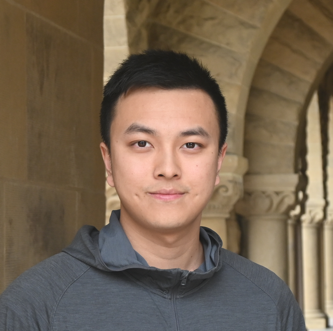
Zhanke Zhou is a Ph.D. student in the Trustworthy Machine Learning and Reasoning (TMLR) Group at Hong Kong Baptist University, advised by Prof. Bo Han. He was a visiting student at the Stanford Trustworthy Artificial Intelligence (STAIR) Lab at Stanford University, working with Prof. Sanmi Koyejo. His research focuses on trustworthy machine reasoning with foundation models, including large language models (LLMs) and vision-language models (VLMs), to solve complex problems such as mathematics and coding, as well as to accelerate scientific discovery and applications in fields such as biology, chemistry, and healthcare. He believes that reasoning is an essential pathway toward achieving artificial general intelligence (AGI). Trustworthy machine reasoning encompasses key properties including reasoning capability, robustness, safety, and explainability.

Chentao Cao is currently a Ph.D. student in the Trustworthy Machine Learning and Reasoning (TMLR) Group at Hong Kong Baptist University, under the supervision of Prof. Bo Han, and collaborating closely with Prof. Zhun Zhong. His research primarily centers on developing trustworthy machine reasoning frameworks with foundation models, including large language models (LLMs) and vision-language models (VLMs). His goal is to create robust and reliable reasoning models capable of addressing complex problems, such as mathematics. By enhancing the trustworthiness of foundation models, he seeks to drive advancements in critical downstream applications, particularly in healthcare and safety domains, thereby enabling more effective and safer solutions in real-world scenarios.
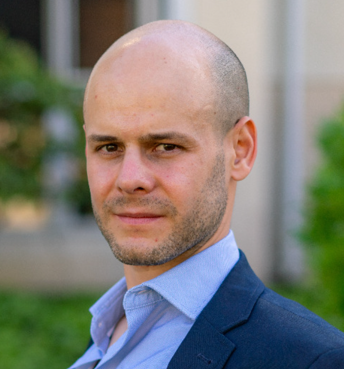
Brando Miranda is a Ph.D. student at Stanford University in the Department of Computer Science, under the supervision of Prof. Sanmi Koyejo. Previously, he was a graduate student at the University of Illinois Urbana-Champaign, a Research Assistant at MIT's Center for Brains, Minds and Machines (CBMM), and a graduate student at the Massachusetts Institute of Technology (MIT). Miranda's research interests lie in meta-learning, foundation models for theorem proving, and human- and brain-inspired artificial intelligence (AI). He completed his Master of Engineering in Electrical Engineering and Computer Science under the supervision of Prof. Tomaso Poggio, where he conducted research on deep learning theory. Miranda has received several awards, including the Most Cited Paper Certificate from the International Journal of Automation & Computing (IJAC), two Honorable Mentions from the Ford Foundation Fellowship, the Computer Science Excellence Saburo Muroga Endowed Fellowship, the Stanford School of Engineering Fellowship, and he is currently an EDGE Scholar at Stanford University.
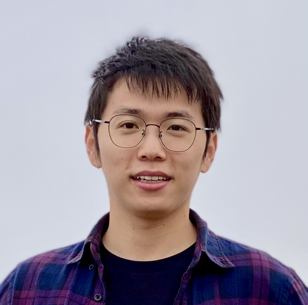
Pan Lu is a postdoctoral researcher at Stanford University. He received his Ph.D. in Computer Science from UCLA in 2024. His research focuses on developing AI methods and systems to advance complex reasoning, mathematical intelligence, and scientific discovery. He has served as Senior Program Chair for NENLP 2025, Program Chair for SoCal NLP 2023, and Co-Chair of the MATHAI workshops at NeurIPS (2021-2024). He is a recipient of several awards, including two Most Influential Paper Awards (NeurIPS 2022, ICLR 2024), a Best Paper Honorable Mention at ACL 2023, the Best Paper Award at the KnowledgeNLP Workshop 2025, and Ph.D. Fellowships supported by Amazon, Bloomberg, and Qualcomm.
Sanmi Koyejo is an Assistant Professor in the Department of Computer Science at Stanford University and a co-founder of Virtue AI. At Stanford, Koyejo leads the Stanford Trustworthy Artificial Intelligence (STAIR) Lab, which works to develop the principles and practice of trustworthy AI, with a focus on applications in science and healthcare. Koyejo has received several awards, including the Skip Ellis Early Career Award, the Presidential Early Career Award for Scientists and Engineers (PECASE), a Sloan Fellowship, a Terman Faculty Fellowship, an NSF CAREER Award, a Kavli Fellowship, and an IJCAI Early Career Spotlight. Koyejo serves on the Neural Information Processing Systems Foundation Board, the Association for Health Learning and Inference Board, and as President of the Black in AI Board.
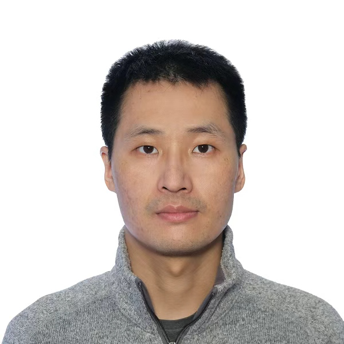
Bo Han is currently an Associate Professor in Machine Learning and the Director of the Trustworthy Machine Learning and Reasoning Group at Hong Kong Baptist University, and a BAIHO Visiting Scientist of the Imperfect Information Learning Team at the RIKEN Center for Advanced Intelligence Project (RIKEN AIP). His research focuses on trustworthy machine learning. He has received multiple paper awards, including the Outstanding Paper Award at NeurIPS, the Most Influential Paper Award at NeurIPS, and the Outstanding Student Paper Award at a NeurIPS Workshop. He is also a recipient of the RGC Early CAREER Scheme, IEEE AI's 10 to Watch Award, IJCAI Early Career Spotlight, INNS Aharon Katzir Young Investigator Award, RIKEN BAIHO Award, Dean's Award for Outstanding Achievement, and the Microsoft Research StarTrack Scholars Program.